Ask an Allendale seller whether the state will step in and help pay if an inspector's tank sweep turns up a buried oil tank, and most assume the answer is yes. New Jersey has a fund for exactly this problem, after all. Surely someone in Trenton is standing by with a check.
That assumption is wrong in a way that shows up at the closing table, not just in theory. The program most people picture when they hear "state oil tank fund" has been closed to new non-leaking-tank applicants since May 2011, and even homeowners with a confirmed leak face a review wait measured in years, 3.5 years as of the New Jersey Department of Environmental Protection's most recently published program fact sheet. If a tank surfaces during your inspection period on an older Allendale property, you and the other side of the deal are the ones who resolve it. The state is not coming, at least not on a timeline that helps you close.
Why This Is an Allendale Problem, Not a Generic One
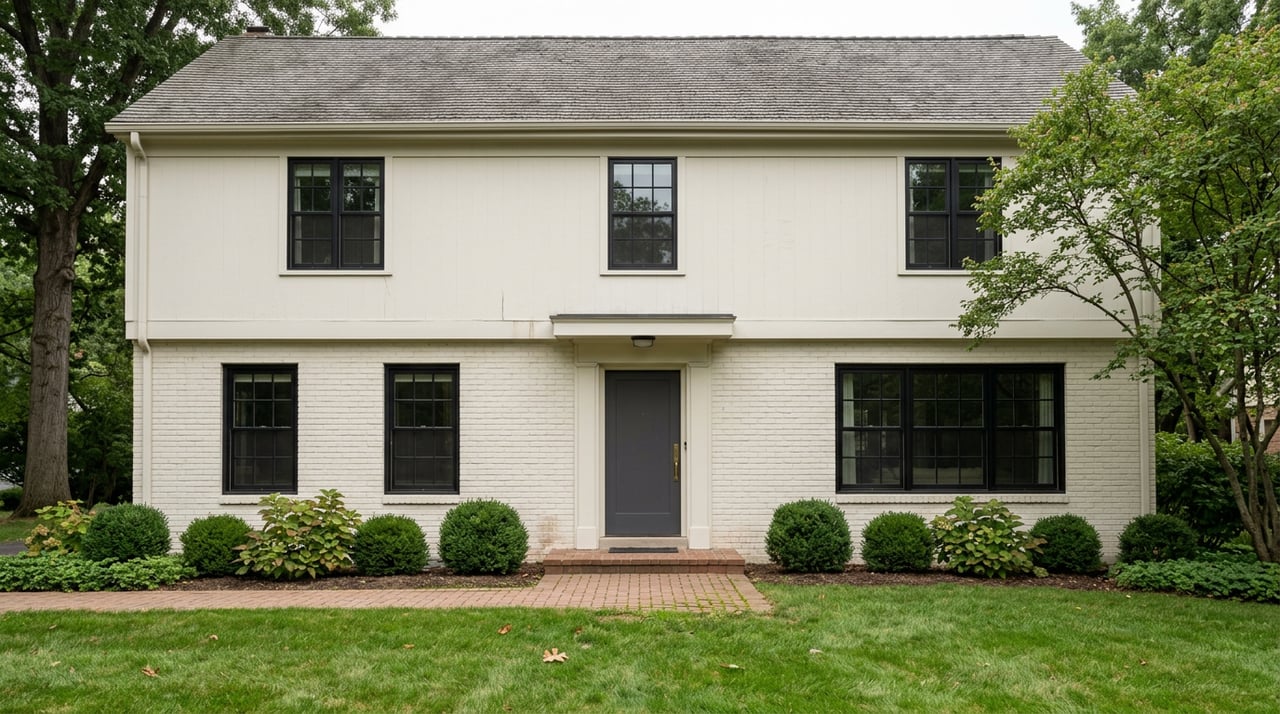
New Jersey has one of the highest concentrations of residential underground oil tanks in the country, and most were installed between the 1930s and the 1970s, before natural gas became the standard heating fuel across the region, according to Accurate Inspections, a New Jersey home inspection firm. That timeline maps almost exactly onto Allendale's own building history. The borough's housing stock includes a meaningful stretch of Victorian and early-1900s homes, and its population and home count did not really expand until after 1950, when the postwar wave of ranches, split-levels, and colonials filled in the streets off Franklin Turnpike and Crest Drive. Both eras predate the shift away from oil heat.
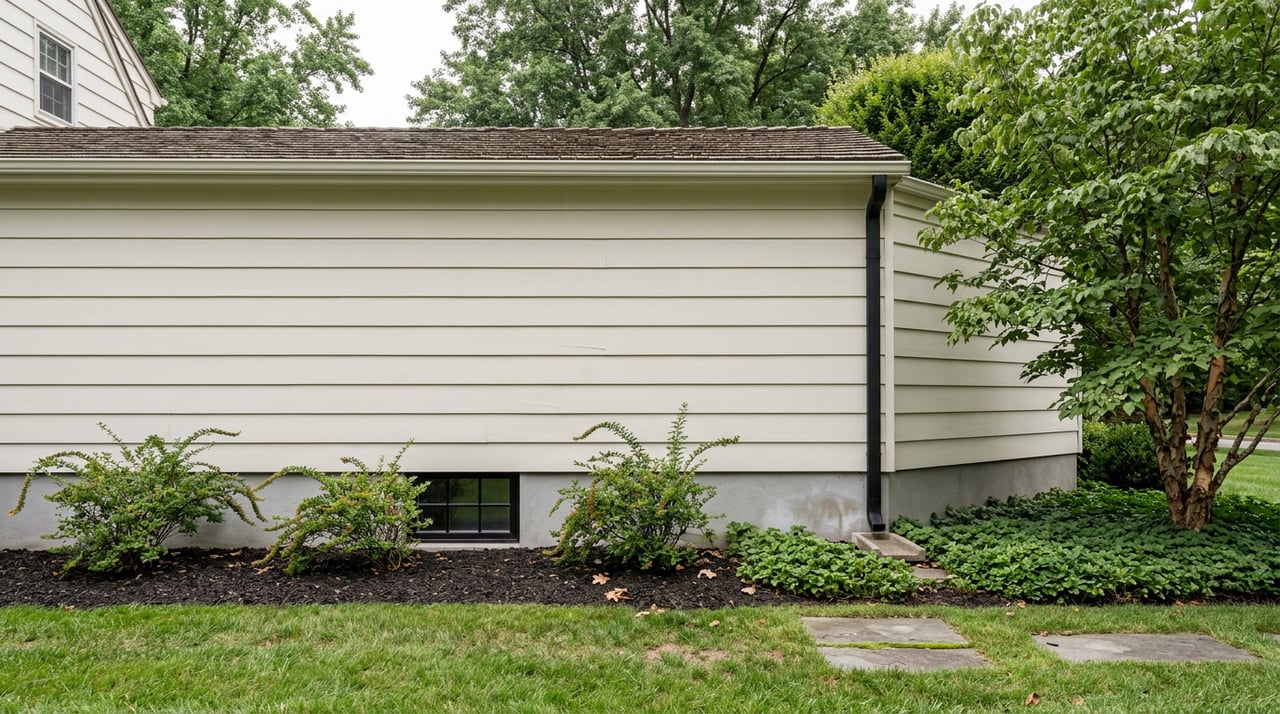
A tank does not announce itself just because a house now runs on gas. Homes that converted their heating system decades ago can still have the original underground tank sitting in the yard, and once the vent pipe and fill valve are removed, there is often no visible sign it is there at all, per guidance from LookSmart Home Inspections. For a downtown Allendale colonial that switched to gas in the 1980s, or a Crest Drive property that has changed hands twice since, nobody currently living there may know the tank exists.
What Your Home Inspector Will Not Tell You
Here is the detail that catches buyers off guard: a standard New Jersey home inspection does not check for underground storage tanks. Inspectors evaluate the visible, accessible parts of a house. They cannot see through concrete, asphalt, or soil, which means a tank buried under a driveway or a side yard sits entirely outside the scope of the report you are relying on to make an offer, as Accurate Inspections notes on its own site.
Finding one requires a separate service, usually called a tank sweep, performed with a magnetometer or ground-penetrating radar to detect buried metal. If you want this covered, you have to ask for it and schedule it, typically alongside your regular inspection but as its own line item.
The Liability Rule That Surprises Buyers
New Jersey's Spill Compensation and Control Act puts the cleanup responsibility on whoever owns the property at the moment a discharge is discovered, not necessarily whoever caused it. In practice, that means a buyer who closes on a home with an undetected tank can inherit full responsibility for soil and groundwater remediation even though they never burned a drop of oil in it, according to LookSmart's summary of the law.
Homeowners insurance rarely helps. A standard policy typically will not cover an oil tank leak except in narrow situations, such as when the leak has already damaged a neighboring property or contaminated groundwater, per the NJ Closing Guide. Some carriers have started declining to write policies at all on homes with a known underground tank.
The tank is not the risk. The assumption that someone else will pay for it is.
The Safety Net That Isn't There Anymore
This is the part worth sitting with. The Petroleum Underground Storage Tank Remediation, Upgrade and Closure Fund was created in 1997 to help homeowners with exactly this problem, administered jointly by the NJDEP and the New Jersey Economic Development Authority. It sounds like the backstop everyone assumes exists. The current reality looks different.
| What people assume | What the fund's own pages say |
|---|---|
| The state will fund tank removal even if it isn't leaking | Non-leaking tank applications have not been accepted since May 3, 2011, per NJDEP |
| A leaking tank claim moves quickly | Review wait time is 3.5 years as of the department's most recent fact sheet |
| Any homeowner qualifies for a leaking-tank grant | Applicants must keep taxable income under $250,000 and net worth under $500,000, excluding primary residence, per NJEDA |
| The old non-leaking grant covered most of the cost | While it accepted applications from 2006 to 2009, it capped reimbursement at $1,200 for removal and up to $3,000 more for replacement with an aboveground tank, per NJEDA's own program rules |
That net worth threshold matters specifically in a town like Allendale. Homes here were listing at a median $1.19 million in June 2026, down 4% from a year earlier, and selling around $800,000 over the three months ending in May 2026. A household that owns a home in that range and has built any retirement savings on top of it is likely to exceed the fund's $500,000 net worth cap once the primary residence is excluded from the calculation. The safety net was never built with this price bracket in mind.
What Actually Happens During Your Inspection Period
Since state assistance is not a realistic option for most Allendale transactions, the tank question gets resolved entirely between buyer, seller, and their attorneys, within the same window that governs the rest of your due diligence. In practice, the sequence looks like this:
- The buyer's inspector or a separate environmental contractor performs a tank sweep as part of the inspection contingency.
- If a tank is located, the seller is now on notice and has a disclosure obligation to any future buyer, which effectively means the property does not sell again until the tank is addressed.
- Because of that disclosure obligation, sellers in New Jersey deals almost always agree to remove the tank at their own expense rather than let the deal collapse or the listing become harder to sell later, per the NJ Closing Guide.
- If the tank shows visible cracks, holes, or oil at the time of removal, the finding must be reported to the NJDEP immediately, which assigns a case number and requires further evaluation.
- Soil samples are collected, typically around $500 for lab analysis, to determine whether contamination exceeds legal thresholds.
- If it does, remediation follows: contaminated soil is excavated, hauled away, and replaced with clean fill, with additional samples confirming the site is clear.
Most of these steps have to happen inside your existing inspection contingency and attorney review period, which is why the tank sweep should be scheduled early rather than treated as an afterthought.
What This Means If You Are Selling an Older Allendale Home
If your home predates the 1970s, or if you are not certain when it converted to gas heat, the smarter move is to get ahead of the question before a buyer's contractor finds it for you. A pre-listing tank sweep costs a fraction of what a mid-contract discovery costs in delay, renegotiation, and buyer confidence. If a tank does turn up, having documentation of proper decommissioning, meaning excavation and removal or a certified clean fill closure, gives your listing a clean record instead of an open question that resurfaces with every subsequent disclosure form.
FAQ
Does a gas-heated Allendale home need a tank sweep? It can. Homes converted from oil to gas sometimes left the original underground tank in place, especially if the vent and fill pipes were removed at conversion, according to LookSmart Home Inspections.
Who pays if a tank is found during my purchase? In most New Jersey deals, the seller agrees to remove it at their own cost once it is discovered, because the disclosure obligation makes the home difficult to sell otherwise.
Is there any state money available at all? Only for confirmed leaking tanks, and only after a multi-year review wait, with income and net worth caps that many owners of higher-value homes will exceed once savings and retirement accounts are counted.
What if the tank isn't leaking? A properly decommissioned tank, meaning it has been excavated and removed or filled with an inert material after cleaning and documented to NJDEP standards, carries no ongoing environmental liability, per Accurate Inspections.
If you are weighing whether to list an older Allendale home this year, or you are under contract and a tank sweep just came back with a finding you did not expect, this is exactly the kind of detail worth walking through before you sign anything else. Megan Fox Group works Allendale deals through this stage regularly and can help you figure out what the next right step looks like. Reach out for a free home valuation and a straight answer about what your specific property and timeline actually require.