The portals will tell you Ho-Ho-Kus has a median somewhere between $1.2M and $1.47M depending on the month you pull. As of May 31, 2026, the Zillow Home Value Index for the borough sat at $1,326,888, up 8.9% year over year. That is a real number. It is also, for a buyer choosing between Ho-Ho-Kus and its neighbors, close to useless.
The reason is geography. Ho-Ho-Kus is 1.74 square miles cut in half by Route 17, and the borough functions as three distinct sub-markets stacked inside one ZIP code. Two houses at the borough median can sit half a mile apart and buy you completely different things. The median tells you the middle of a distribution. It does not tell you which distribution you are actually shopping in.
The three sub-markets, in one glance
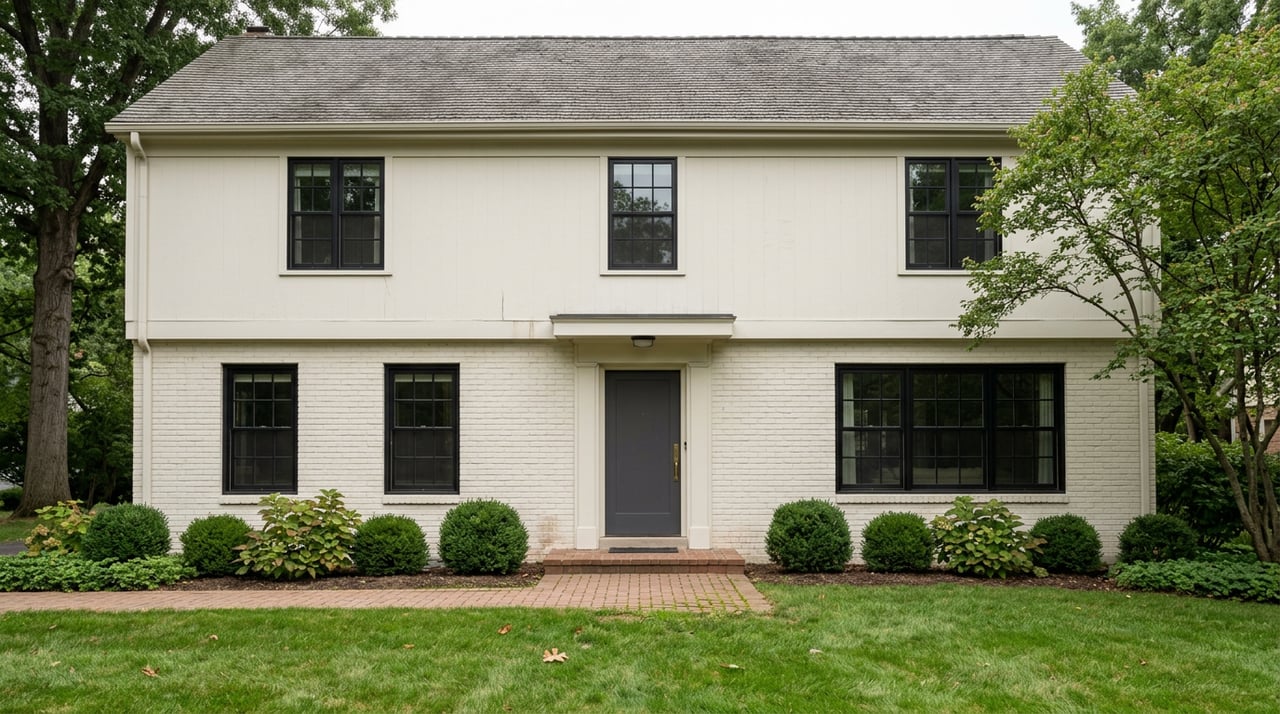
The west side holds the train station, the downtown, and the denser residential grid. The east side runs toward the Saddle River and Saddle Brook, with larger lots and lower density. Inside the west side, the Cheelcroft development, built around the Great Depression in brick and stucco colonials and Tudors, behaves like its own micro-market with its own pricing floor.
| Sub-market | Typical housing stock | Typical range |
|---|---|---|
| West side, standard | Cape Cods, mid-century colonials, updated ranches | ~$570K entry to ~$1.5M |
| Cheelcroft historic | Depression-era brick and stucco colonials, Tudors | ~$1.75M with limited turnover |
| East side, near Saddle River | Larger colonials and estates, one-acre-plus parcels | ~$2M to $3M+ |
A buyer who anchors to the $1.33M borough figure and tours only in one of these three will misread every comp they see.
What the west side buys at the entry point
The west side is where the median gets built. Cape Cods and smaller colonials cluster near the train station and the downtown grid, with sidewalks, mature street trees, and short walks to Zabriskie Park and the Ho-Ho-Kus Brook Ravine. Entry-level four-bedroom Cape Cods have been available starting around $570K when they surface, with most west-side single-families landing in the $1M to $1.5M band.
The mechanism worth understanding here is walkability. The train station sits next to Zabriskie Park, and NJ Transit's Ho-Ho-Kus stop is a working commuter station rather than a park-and-ride. Every incremental block closer to the station and the downtown restaurant row compresses the price premium into a smaller and smaller lot. West-side buyers are effectively paying for the walk, not the square footage.
Cheelcroft is a market inside a market
Cheelcroft is the tell that borough averages hide. The development dates to around the Great Depression, and its brick and stucco colonials and Tudors are structurally scarce. When one sells, it tends to sell to a buyer who wanted a Cheelcroft house specifically, not a Ho-Ho-Kus house generally. Landmark stock of this kind has traded around $1.75M, and inventory is thin enough that months can pass between listings.
For a buyer running comps, this matters in two directions. If you fall for a Cheelcroft house and pull west-side Cape Cod comps to justify an offer, you will underbid it and lose. If you tour a mid-century west-side colonial and pull Cheelcroft comps, you will overpay. The two data sets do not talk to each other, even though they share a ZIP code and a school district.
East of Route 17, lots do the pricing
Across Route 17, the density drops and the acreage climbs. The Saddle River and Saddle Brook both run through this side of the borough, and estate parcels of an acre or more are the norm rather than the exception. A renovated five-bedroom ranch on an acre near Saddle Brook has traded around $2.1M, and larger colonial and estate stock moves higher from there.
Here the pricing mechanism flips. On the west side you are paying for proximity. On the east side you are paying for land. Two houses of identical square footage, one built in 1955 on a quarter-acre near the station and one built in 1985 on a 1.2-acre parcel east of 17, will price on entirely different logic. Improvements matter, but the lot sets the ceiling and the floor.
The tempo number that matters more than the median
Ho-Ho-Kus does not have volume. In June 2026, roughly 23 homes were on the market and the median time from list to contract sat near 20 days, up modestly from 15 days a year earlier. Zillow's ZHVI showed 8.9% year-over-year appreciation as of the May 31, 2026 read.
Twenty days is not a slow market, and 23 active listings across three sub-markets is not deep inventory. In practical terms, a well-priced house in the west-side $1M to $1.5M band still moves in the first two weekends. A Cheelcroft house sits until the right buyer surfaces, which can be quick or can be months. An east-side estate lot prices to the buyer pool for that specific acreage, which is small. Averaging those three tempos into one "days on market" figure smooths away the thing a buyer actually needs to plan around: how fast do I need to be ready to write, in the specific sub-market I am shopping.
How to read a Ho-Ho-Kus listing before you tour it
Three friction points catch out-of-town buyers regularly.
First, the address alone does not tell you which side of Route 17 the house sits on, and the highway is a functional divide the way a river is in other towns. Pull the parcel on a map before you drive.
Second, older west-side stock often carries additions and renovations layered over original 1940s and 1950s Cape Cod footprints. Square footage on the listing can include finished basements, sunrooms, or converted attics that a New Jersey appraiser will treat differently. Ask for the source of the square-footage figure before you write.
Third, on east-side estate parcels, driveway easements, shared frontage on the Saddle River, and older septic or well infrastructure show up more often than buyers expect. These do not kill deals, but they add attorney review time under New Jersey's three-day attorney review window and can shift the inspection scope meaningfully.
None of this is unique to Ho-Ho-Kus. What is unique is the compression. In 1.74 square miles you get three pricing logics, three inventory tempos, and three inspection profiles, and the borough-level median averages them into a number that describes none of them.
FAQ
Is Ho-Ho-Kus a seller's market or a buyer's market right now? Neither label fits cleanly. Roughly 23 active listings against a June 2026 median time-on-market of 20 days points to a seller-leaning market for well-priced west-side inventory, and a slower, more negotiated pace for Cheelcroft and east-side estate stock. The tempo depends on which sub-market you are in.
How does the Ho-Ho-Kus median compare to the borough's actual price bands? The May 2026 ZHVI of $1,326,888 sits inside the west-side mainstream band of roughly $1M to $1.5M. It is below Cheelcroft's typical trade level near $1.75M and well below east-side estate pricing, which starts around $2M. The median describes the middle of the west side more than it describes the borough as a whole.
What is the smallest budget that realistically buys in Ho-Ho-Kus? Four-bedroom Cape Cods on the west side have surfaced starting around $570K, though at that level inventory is thin and moves fast. Buyers targeting the entry point should be pre-approved, tour on the day of listing, and expect competition from move-up buyers already in Bergen County.
Does Route 17 actually affect resale value? It affects buyer pool more than headline price. West-side buyers weight walkability to the train and downtown. East-side buyers weight lot size and privacy. A house that leans against the grain of its sub-market, a large lot buyer looking on the west side or a walkability buyer looking east, will sit longer regardless of price.
Working the borough at street level
Ho-Ho-Kus rewards buyers who stop reading the borough average and start reading the block. If you are comparing Ho-Ho-Kus to Ridgewood, Wyckoff, or Allendale, the honest comparison is sub-market to sub-market, not median to median. West-side Cape Cod against Ridgewood colonial. Cheelcroft Tudor against a specific pocket of Wyckoff. East-side estate lot against Saddle River or Upper Saddle River acreage.
That is the analysis worth paying for, and it is the one the portals cannot run for you. If you are getting close to a decision and want the sub-market comps for a specific street in Ho-Ho-Kus, or a read on which of the three sub-markets fits what you actually want, Megan Fox Group is happy to sit down and walk through the numbers with you.